
Chiropractor's Guide to a Stiff Back
Should You See a Chiro for a Stiff Back?
Most people have experienced a stiff back at some point. Maybe it's after a long day sitting at a desk, hours spent looking down at your phone, a weekend of gardening, or an old injury that never quite settled down.
For many people, stiffness is simply annoying. But when a spinal joint remains stiff for weeks, months or even years, it can contribute to changes inside the spine that may eventually lead to osteoarthritis. The good news? Movement matters. One of the main goals of chiropractic care is to restore healthy movement to the joints of the spine before prolonged stiffness contributes to ongoing degeneration.
Why Does the Spine Become Stiff?
Our spine is designed to move. Each spinal segment contains a pair of small joints at the back called facet joints, along with an intervertebral disc at the front. Together, they allow us to bend, twist and absorb everyday forces.
Facet joints can become stiff for many reasons, including:
Prolonged sitting at a desk
Poor workstation ergonomics
Looking down at a phone or laptop for long periods
Long drives
Old sporting injuries
Previous whiplash or car accidents
Muscle guarding after lifting injuries
Reduced activity levels
Age-related changes
Often, people simply notice that "my back doesn't move like it used to."
Why Is Spinal Movement So Important?
Unlike many tissues in the body, the discs between the vertebrae have a very limited direct blood supply in adulthood. Instead, they rely largely on the movement of the spine to help nutrients and oxygen diffuse into the disc while waste products diffuse out. Think of it like gently squeezing and releasing a sponge. Regular movement appears to support this exchange, whereas prolonged immobility may reduce it. While disc health is influenced by many factors—including age, genetics, smoking, body weight, and overall activity—keeping the spine moving is one factor we can actively work on.
What Happens When a Joint Stays Stiff?
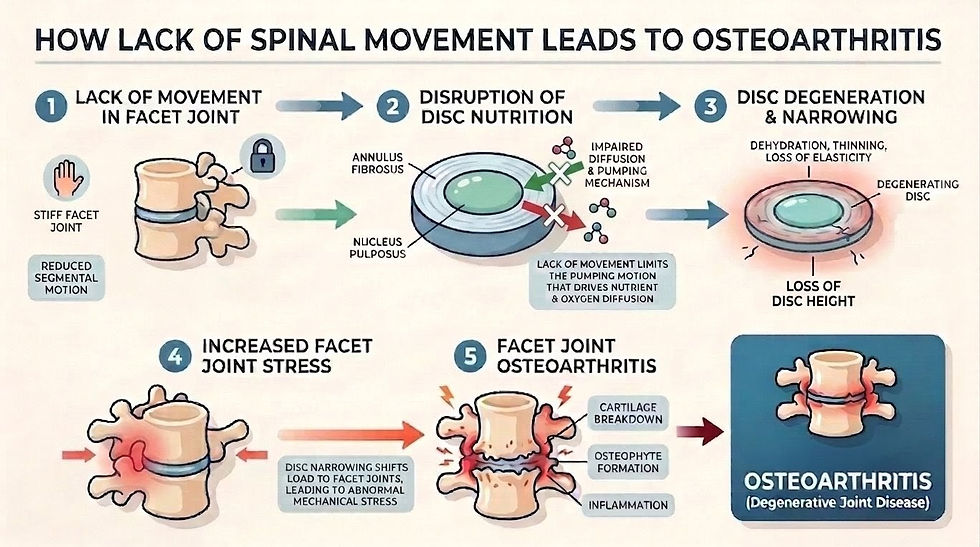
When a facet joint doesn't move normally, a series of changes can occur over time.
1. Reduced Joint Movement
The facet joint loses its normal mobility. This can happen because of muscle tightness, joint irritation, previous injury or simply spending too much time in one position. You may notice:
Morning stiffness
Difficulty turning
Feeling "locked up"
A dull ache after sitting
2. Reduced Disc Nutrition
Healthy spinal movement helps the discs exchange nutrients and remove waste products. When movement is reduced for long periods, this process may become less efficient. It's important to note that movement is just one piece of the puzzle—disc degeneration is a multifactorial process influenced by genetics, ageing, mechanical loading and lifestyle factors. Reduced movement alone does not inevitably cause disc degeneration, but it may contribute over time.
3. Disc Degeneration
As discs age they naturally lose water content. If a disc becomes thinner or less resilient over time, it loses some of its ability to absorb forces. This process is known as disc degeneration, and while it is a common part of ageing, excessive mechanical stress may accelerate changes in some people.
4. More Load on the Facet Joints
As the disc loses height, more of the load passing through the spine can shift towards the facet joints. These joints were never designed to carry excessive load all day, every day. Over time this may increase mechanical stress on the joint surfaces.
5. Osteoarthritis Develops
Persistent abnormal loading may contribute to osteoarthritis of the facet joints. This can involve:
Cartilage wear
Bone spur (osteophyte) formation
Joint enlargement
Stiffness
Pain
Reduced movement
This creates a cycle where arthritis causes more stiffness, and stiffness further reduces movement.
How Can a Chiropractor Help?
A chiropractor focuses on restoring normal movement to joints that have become restricted. At our clinic, your Thornlie chiropractor begins with a thorough assessment to determine whether a stiff joint is contributing to your symptoms. Depending on your individual needs, care may include:
Chiropractic adjustments to improve joint mobility
Joint mobilisation techniques
Soft tissue therapy
Exercise prescription
Postural advice
Ergonomic recommendations
Strengthening and mobility exercises
The aim isn't simply to "crack your back." It's to restore healthier movement, reduce excessive stress on the surrounding joints and help you keep your spine functioning as well as possible over the long term.
For some people, we may also recommend complementary care such as physiotherapy or massage, depending on the nature of the problem and your goals.
When Should You See a Chiropractor?
Consider booking an assessment if you have:
Back stiffness
Neck stiffness
Pain with or after sitting
Difficulty turning or bending
A history of whiplash
Recurring episodes of your back "locking up"
Pain that keeps returning despite stretching
Early assessment may identify movement restrictions before they become long-standing problems.
Looking for a Chiropractor in Thornlie or near Gosnells?
If you're searching for a chiro in Thornlie, or a chiro near Gosnells, we'd be happy to help. Whether your stiffness has just started or has been bothering you for years, we'll perform a thorough assessment, explain what's going on, and develop a treatment plan tailored to your needs.
If you have a stiff back and would like a chiropractic assessment, click 'Call For An Appointment' or 'Book Online' above. We're here to help you move better, feel better, and keep your spine functioning at its best.


